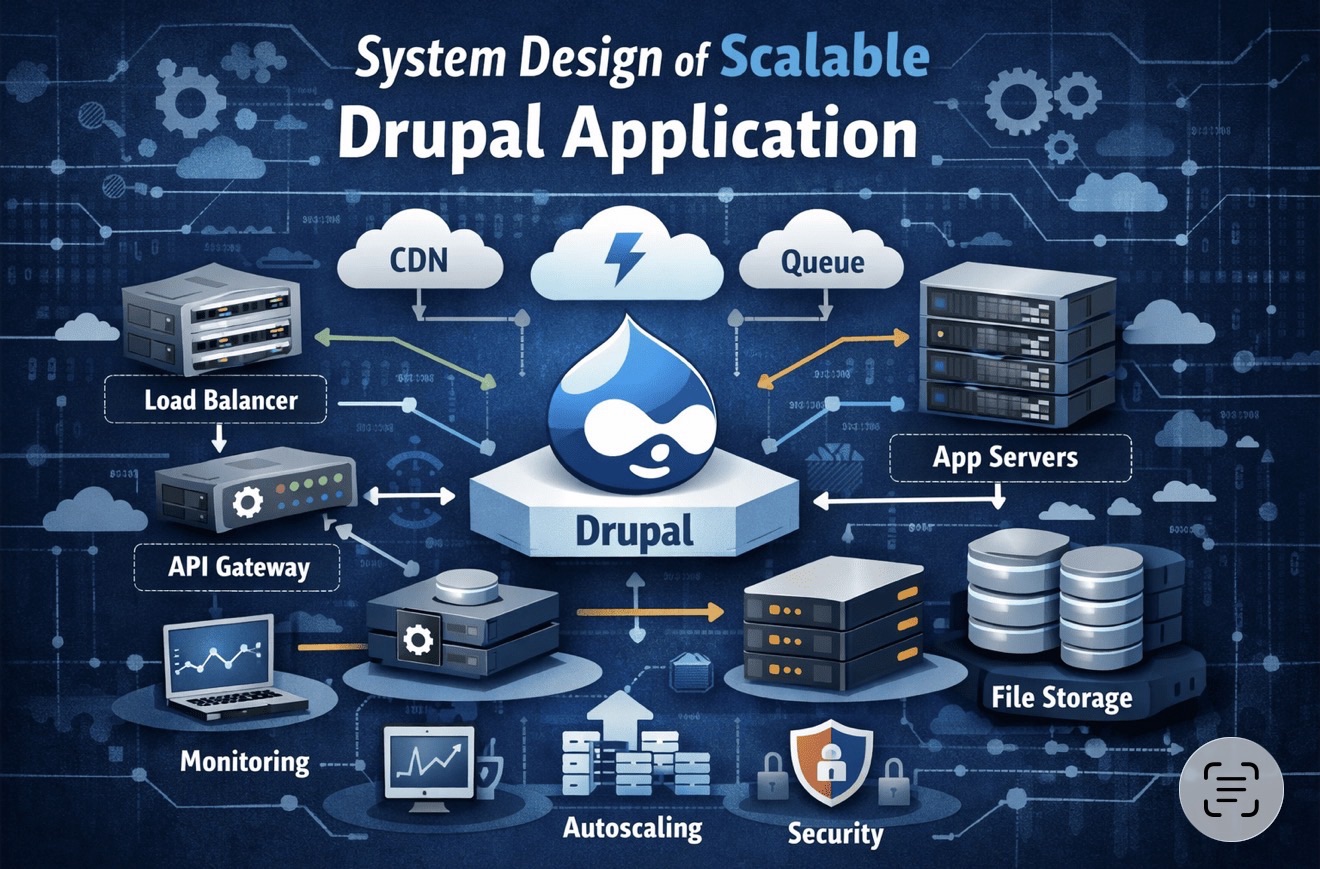
Choosing between Drupal and WordPress is one of the most common decisions in web development. Both platforms are powerful, but they serve different needs depending on scale, complexity, and budget.
Below is a quick comparison of key factors to help you make a decision more quickly.
Drupal vs WordPress Comparison
| Higher requires skilled developers | WordPress | Drupal | Winner |
|---|---|---|---|
| Ease of Use | Very beginner-friendly, quick setup | Steeper learning curve | WordPress |
| Technical Stack | PHP (procedural + partial OOP), MySQL | Modern PHP (OOP, Symfony), multiple DB support | Drupal |
| Backend Development | Simple hooks-based development | Structured, service-based architecture | Drupal |
| Community | Massive global community | Smaller but highly specialized | WordPress |
| Market Share | Dominates web (40%+) | Niche but strong in enterprise | WordPress |
| Performance | Needs optimization at scale | Built for performance and complex data | Drupal |
| Handling Millions of Content | Possible but requires heavy optimization | Handles large datasets more efficiently | Drupal |
| Security | Depends on plugins and maintenance | Strong core security, enterprise-grade | Drupal |
| Accessibility | Depends on themes/plugins | Strong accessibility in core | Drupal |
| Maintenance Cost | Lower, easier to manage | Higher as it requires skilled developers | WordPress |
| Hosting Cost | Can run on cheap hosting | Needs more powerful infrastructure | WordPress |
| Developer Cost (Estimates) | €20–€80/hr | €50–€150+/hr | WordPress |
| Third-party Integrations | Easy via plugins | More flexible and customizable | Drupal |
| Plugins / Modules | Huge ecosystem, easy to use | Smaller but more structured | WordPress |
| AI for Development | Faster plugin/theme generation | Requires more structure and expertise | WordPress |
| Headless Capability | Good with plugins | Strong native API-first approach | Drupal |
| Best Use Cases | Blogs, marketing sites, SMB websites | Enterprise, government, complex platforms | Depends |
Conclusion
If you want speed, affordability, and simplicity, WordPress is the clear winner. It helps you launch quickly and manage content with minimal effort. If you are building a complex, large-scale system with structured data, high security, and long-term scalability, Drupal is the better choice.
In short, WordPress is ideal for moving fast, while Drupal is built for handling complexity at scale.